


News
Players
Tournaments


News
Players
Tournaments


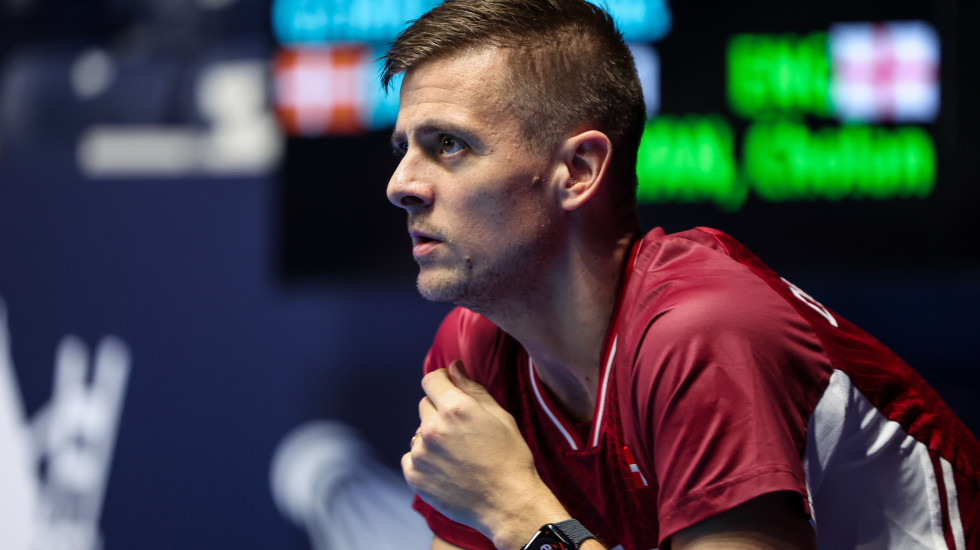
‘There’s a Generational Shift Going On’
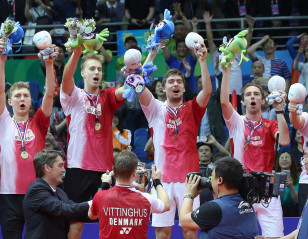
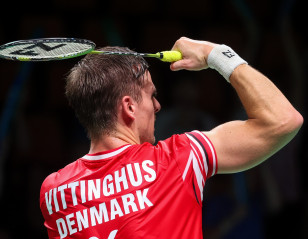
After a long and distinguished playing career, Hans-kristian Vittinghus took up a role as Denmark’s men’s singles coach last year. One of the heroes of Denmark’s Thomas Cup-winning campaign in 2016, Vittinghus speaks about the upcoming Thomas Cup in Horsens, Denmark’s challenges in men’s singles, France’s rise, and his team’s prospects on home turf.
This is your first big assignment as coach on home soil… what does it mean for you?
I’m really excited about it. Obviously, as a player, Thomas Cup was one of the things I always enjoyed the most, and I don’t think it’s going to be any different. As a coach, I also went to the European Men’s and Women’s Team Championships about a month ago, and got a little taste of what it’s like to be part of these team events as a coach. And I can only imagine that being part of a team on home soil for Thomas Cup, which is has a special place in my heart, it’s just going to be an amazing experience. I remember when we played the Thomas Cup in Aarhus back in 2021. It was an amazing feeling. The support was out of this world. So I’m really hoping to experience some of the same in Horsens this time. And I honestly cannot wait. I’m really excited.

I was expecting you to say that the pressure is going to be intense. You’re in a pretty tough group as well. That doesn’t seem to be weighing you down at the moment.
Well, no, the pressure is not really something I’ve thought much about. I’m mostly just excited about getting there and being part of an event like that. Obviously, I should say that the group is quite tough. We have both Korea and Chinese Taipei and, of course, Sweden. We know that we are in a group where we can risk going out in the group stage, which would not be very nice feeling to do on home soil. But on the other hand, I also feel like it’s a group where we can actually beat all the teams, so we also have a chance of being number one in the group.
I just don’t focus much on the pressure. I focus more on the fact that we are going to play an amazing event. We’re going to do it on home soil. And I know because I tried it once before, so I know for a fact that it is an amazing feeling to step on court. I won’t be stepping on court, but I will still feel the same amount of support as last time.
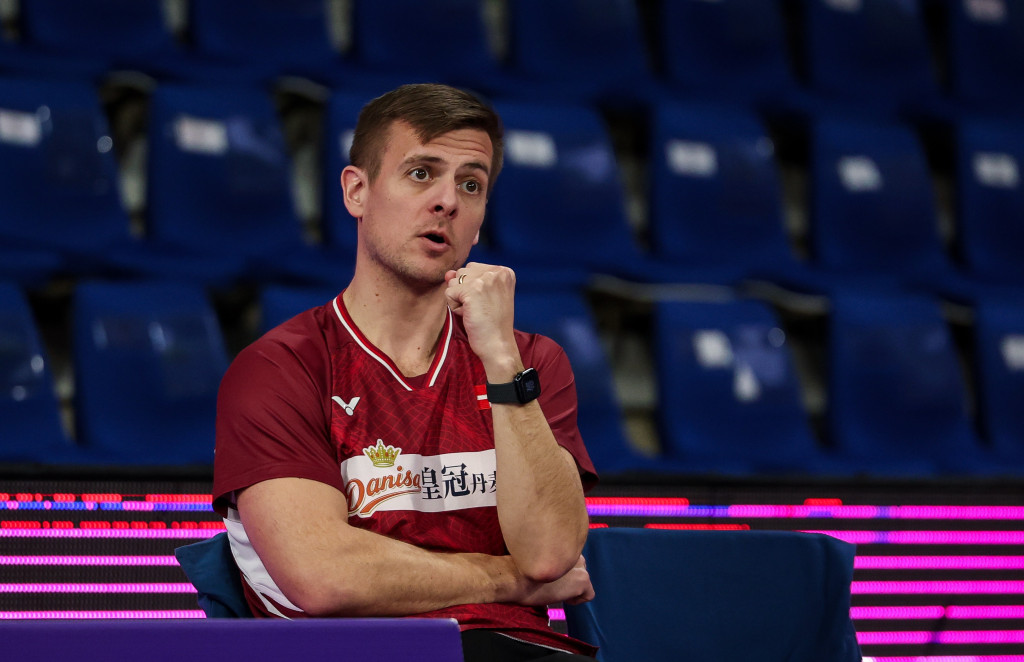
You’re still relatively new into your coaching career with the national team. How has the experience been?
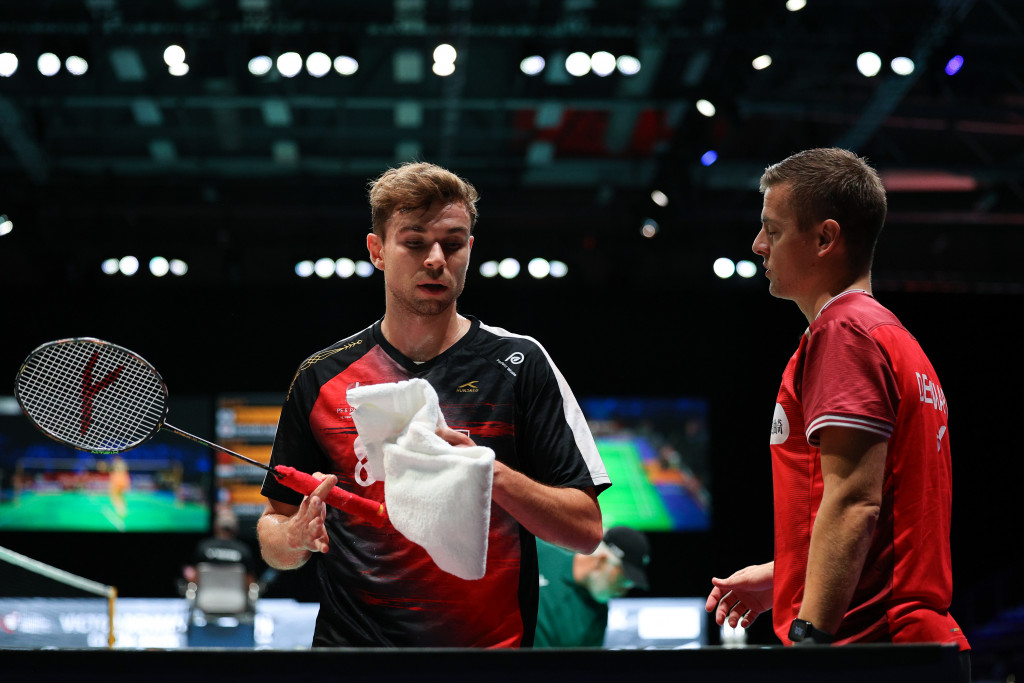
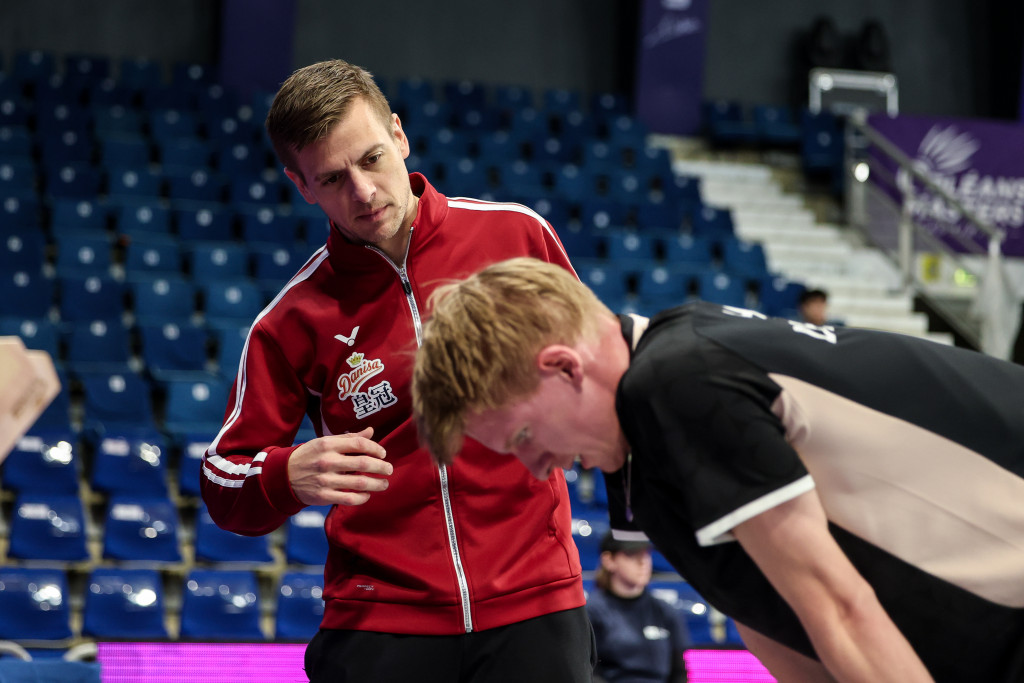
I really enjoy it. I really enjoy the process of working with the players on a daily basis. I actually enjoy that part more than traveling to tournaments. I’ve travelled enough in my life, so I don’t mind doing it again now, but it’s the daily work with the players — I have seven guys in my in my group here — and they’re all thinking in different ways. They have different strong parts and weaker parts. So you have to be really adaptable.
Working with all of them, you cannot just work in one way with everyone and expect to get the same results. That’s really challenging, because I’ve also been used to doing things my own way, but I cannot just copy that for each of these seven individuals. It’s also a very, very exciting opportunity, and also an opportunity where, because I’m still quite new in this role, it’s an opportunity for me to grow and understand the game in a different way.
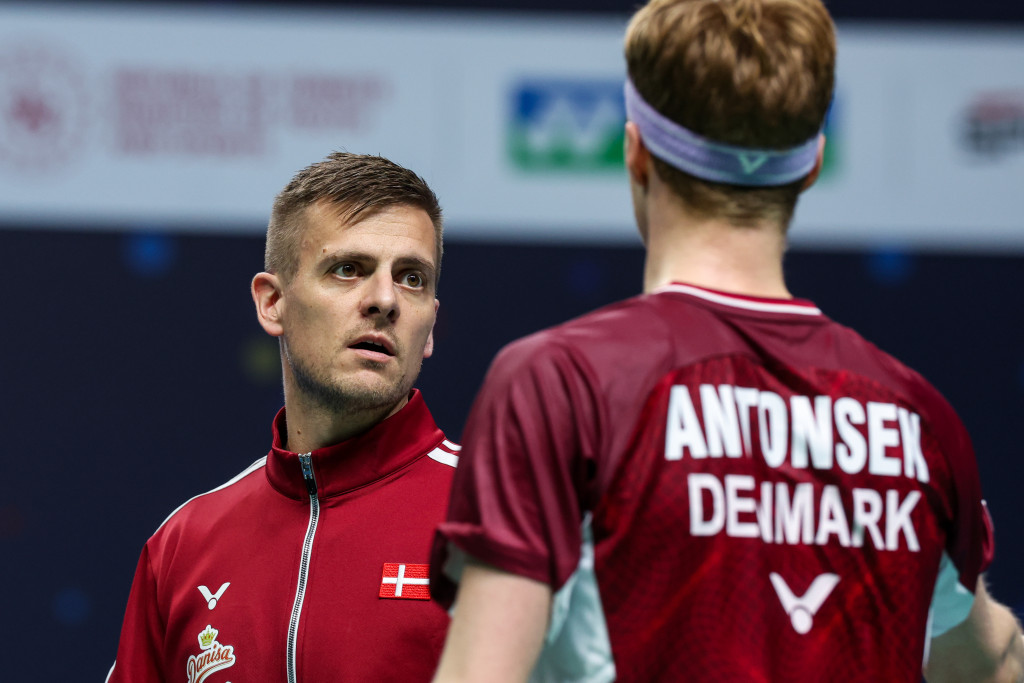
Have you done many team events since you took over as men’s singles coach?
The European (Men’s & Women’s Team) Championships was the only team event I’ve done. We didn’t win, but it was good test for us before the Thomas Cup. So it was a good test for me to be there as as a team coach, but also for the guys to be together and get some experience as a team, working together and being there for each other. Being there without Viktor Axelsen was a new situation that we haven’t been used to for many years. So we need to find a good solution, to produce good results without him.
Historically, Denmark have been very strong in the men’s events. Over the last one year, the team has looked vulnerable. Are you worried?
Yes, of course, we know that we are not as strong as we have been for the past 10 years. There’s no way of hiding that. We are in a process of a generational shift in the men’s singles group. No doubt about that. But also, to be honest, it was actually one of the things that made it a little bit easier for me to accept the role as men’s singles coach, because I feel like I go into this role with less pressure. If I went to enter the role and I had Viktor (Axelsen), Anders (Antonsen) and (Rasmus) Gemke as my top three guys in the national team, and I had them every day, the expectation would be that I deliver World Championships and Olympic medals, titles at the Super 1000 and so on.
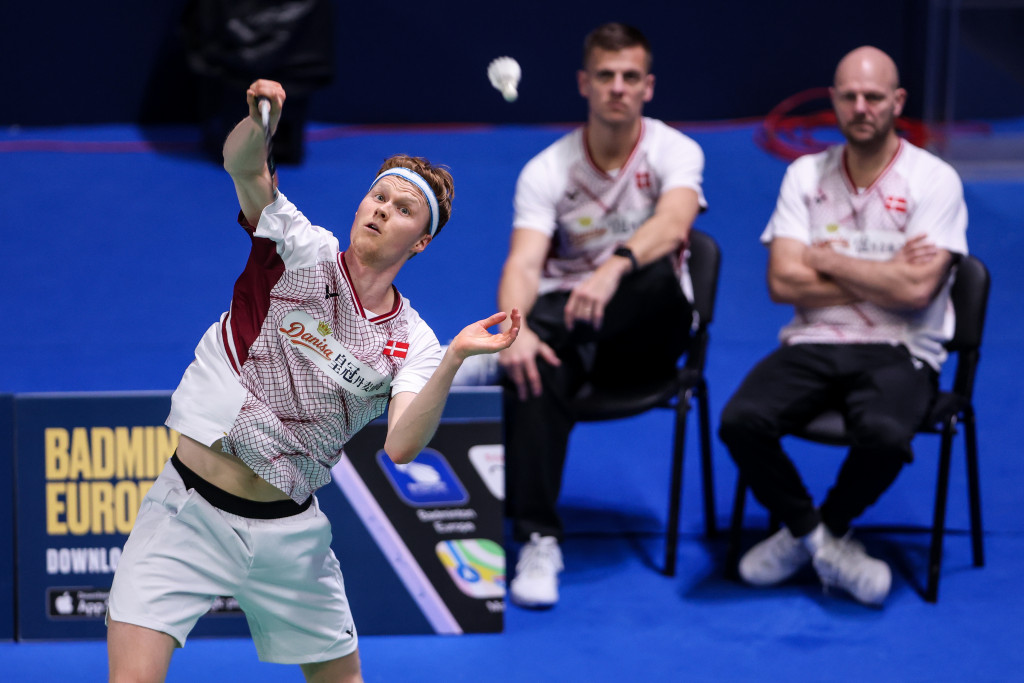
Right now, I don’t have Viktor and I don’t have Anders on a daily basis. I have Gemke and then a group of young guys. So the expectation is not that I deliver World Championships medals straight away, or Olympic medals. The expectation is that over a few years, I can produce players that will have world class level, so in that way I feel less pressure to perform, and I can grow into the role and find out exactly how to solve this situation. Because obviously the ambition is still to produce men’s singles players who can win medals at the World Championships and Olympics. I just don’t see it for us in the next year, but yeah, hopefully in two, three, four, five years, something like that. Hopefully I’ll be in the role for a long time and being part of solving this generational shift that we are going through.
Denmark has slipped from its position as the top European team. What does that make you feel, especially with France coming up so strong and producing great results, and Denmark’s struggling a bit.
Of course, we would like to still be just number one in Europe. But on the other hand, it’s very positive to see that France has risen to a level where they are actually world class. I would be more concerned if we had lost our spot as number one, if it was because our level was just dropping and dropping. You can argue that maybe our level has dropped a bit, but I would still say that we have players that are world class. We still deliver medals at the World Championships, at the Olympics as well. I still believe that the Danish national team is at a world class level.
Now we just have another European country who are also producing world class players, which is positive for Europe. That being said, we still would like to be the number one for sure. And now we lost to France in the men’s team championships, which was the first time in history that we lost the men men’s event in Europe. Obviously, we don’t like that, and we would like to win back the title next time. It’s also healthy for us to have this kind of pressure and someone pushing us.
We need to do better and to keep up with them. They are still progressing and moving forward, and it’s a challenge that we need to take up. So on one hand, I’m very happy. And on the other hand, of course, it’s also annoying, because obviously, when you’re in the lead, you just want to win as much as possible, right?
The sport is changing all the time. How are you approaching it? Is there a radar at the back of your mind about how men singles is evolving? It it instinctive or do you have to make very conscious, deliberate decisions?
I’m very conscious about that. I try to be very conscious that I don’t put on the players that they need to do what I did in my career. It’s like we need to adapt to the new situation, the new way the game is played. It’s always evolving. And now we also need to think about fact that it might be only played to 15 points from next year. I try to be really open-minded in terms of listening to the feedback from my players. I make sure that I don’t just impose of them what worked back in 2018 when I was at my best, because we are in a very different situation now.
Looking at your squad – Antonsen and Gemke in the first two singles, and Magnus (Johannesen) and Ditlev Jaeger Holm in fourth?
Yes. Those are the four guys that we picked for this team. Holm’s not a young guy, he’s not very experienced. I think he’s 28 now. He’s been dealing with injuries for long periods of his career, but was always a big talent as a younger player. And over the past year, he’s really proven that, that on his day, he can challenge some of the best. He was very close to beating Chou Tien Chen at the Arctic Open last year. He beat Lee Chia Hao in the German Open this year, and had a very close one against Chi Yu Jen also. So I think he’s a good ‘joker’ for us to have.
Magnus is a young guy who’s improving. He was out with a meniscus injury for almost a year, but has now spent the past year getting back, and I think he showed in Orleans a few weeks ago that he’s back at a very high level, beating (Kidambi) Srikanth quite comfortably, and also Wang Zheng Xing from China. So I have confidence in the guys that they have the ability to win, also deciding matches against the top
You won the Thomas Cup for Denmark playing third singles in the final. How crucial is mental strength in that position?
The third singles is not necessarily about who has the best skill set in terms of shots and shot quality. it’s much more a mental game. And all these guys, they have the shots and the movement and stuff to be able to win at this level. So it’s more who can, who can handle the situation in terms of mindset and mentality, and that’s the biggest challenge that you need to address in that situation.
To be honest, I think the level in men’s singles in general is so high that all the guys in the top 100 can beat each other. So I think it’s also important for us to remember that when we go into the Thomas Cup that even though, on paper, we don’t have the strongest lineup, also compared to past editions, we still have the knowhow on how to handle these situations, and all the guys have shown that they can be good players. So in these, these Thomas Cup matches, everything can happen. Which is why I still go into Thomas Cup believing that we have a chance to medal. I know we are not one of the favorites necessarily to medal, but I think we can do it for sure.
What are the conditions like in Horsens? How does it play?
I don’t know. I haven’t been there, so I don’t know. I know it’s a smaller stadium, so I think it can seat around 3000 people, so a little bit smaller than the Denmark Open. I think they’ve already sold quite a lot of the tickets, so hopefully it will be a quite an intense atmosphere. But I haven’t actually been in the hall.
Also Read: Flashback: ‘The Most Unreal Feeling’

Thomas & Uber Cup News
Horsens 2026: Memorable Matches 10 May 2026
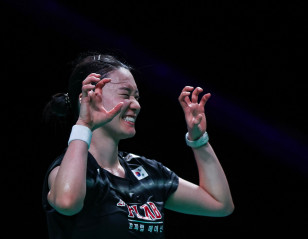
‘Kim Ga Eun Surprised Us’ 7 May 2026

Achievements Unlocked 6 May 2026
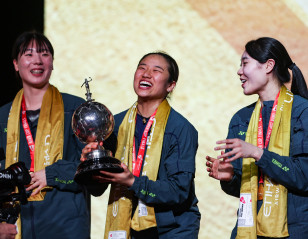
Milestones and Memories as Curtains Fall on Horsens 2026 5 May 2026
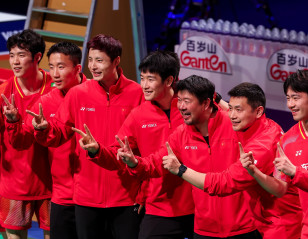
A Thomas Cup Final for the Ages 5 May 2026
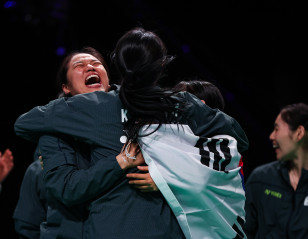
Kim Ga Eun Inspires Korea to Victory 3 May 2026

Clarification on Team Lineup for BWF Thomas Cup Final 2026 3 May 2026
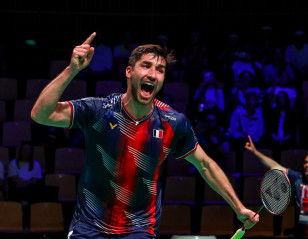
French Revolution Unfolds in Horsens! 3 May 2026
China, Korea to Face Off in Final 2 May 2026
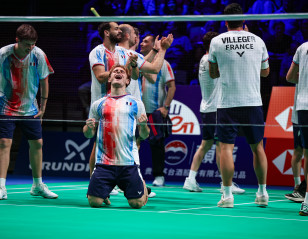
Bleu Brilliance: France Make History 2 May 2026
‘Lakshya Showed How It’s Done’ 1 May 2026
Indonesia Face Korea in Semis 1 May 2026
Battered & Bruised, Chinese Taipei Survive 30 April 2026
French Wave Sinks Indonesia 29 April 2026
During Titanic Battle, A Human Moment 28 April 2026
Sensational Comeback by Korea 28 April 2026
Arin Dents Japanese Pride 27 April 2026
Indonesia Edge Thailand in Thriller 26 April 2026
Malaysia Face Searching Questions 26 April 2026
Strong Start, High Hopes 25 April 2026
Nalbantova Inspires Bulgarian Resistance 25 April 2026
Past Champions Seek to Recreate Winning Memories 24 April 2026
In Unfamiliar Role, Ginting Readies for Critical Call-up 23 April 2026
Where To Watch: BWF Thomas & Uber Cup Finals 2026 23 April 2026

BWF Announces BK8 News as Presenting Partner of the BWF Thomas &... 22 April 2026
Coming-of-Age Canada Eye Thomas Cup Breakthrough 22 April 2026
Algeria & South Africa: Carriers of a Continent’s Hopes 21 April 2026
Thomas Cup Preview: Indonesia, Chinese Taipei Hold the Aces 20 April 2026
Flashback: A Seminal Event for Denmark 19 April 2026
Uber Cup Preview: China Favourites, but Surprises Likely 19 April 2026
Doubles Depth Fuels Malaysia’s Push 18 April 2026
Intanon, Kjaersfeldt Poised for Record 17 April 2026
Flashback: ‘The Most Unreal Feeling’ 14 April 2026
Korea Bank on Unheralded Singles 14 April 2026

Early Start for Defending Champions 13 April 2026
Rising Falcons Usher Australia’s New Era 4 April 2026
Indonesia Face Early Test from France, Thailand 18 March 2026
Finland, Spain Headed to Horsens 13 March 2026
France Seeded Fifth for Thomas Cup 19 February 2026

VICTOR Confirmed as Official Equipment Partner of BWF Thomas & Uber Cup... 27 April 2025
2024 in Review: Chinese Sweep in Chengdu 29 December 2024
Horsens Next for Thomas & Uber Cup Finals 7 May 2024
Chinese Juggernaut Rolls On 6 May 2024

Title No.16 for China 5 May 2024
It’s China Versus Indonesia, Episode 7 5 May 2024
Singles to Indonesia’s Rescue 4 May 2024
Chou Leads Chinese Taipei to Historic Medal 4 May 2024

Indonesia Break 14-Year Medal Drought 3 May 2024
Leong Swings Tie for Malaysia 3 May 2024
Indonesia Ace India Test, Face Korea 2 May 2024
Uber Cup: Japan Drawn in Top Half with China 1 May 2024
Hoh Kindles Malaysian Hopes 1 May 2024
Thrilling Homecoming for Wendy Zhang 30 April 2024

Czechmate in Debut Campaign! 30 April 2024
Prannoy Confronts New Health Concern 29 April 2024
Net Finesse Sees Axelsen Through 28 April 2024
India’s Second-String Grab their Chance 27 April 2024
Outclassed, but Uganda Win Hearts 27 April 2024
Intanon Searching for Best Version of Herself 27 April 2024

Where To Watch: TotalEnergies BWF Thomas & Uber Cup Finals 2024 27 April 2024
‘A Little Sad’ Momota Prepares for Farewell Campaign 26 April 2024
Defending Champs Feeling the Pressure 25 April 2024
Thomas Cup Preview: Chinese Taipei the Team to Watch 25 April 2024
Landmark Edition for Remarkable Veterans 24 April 2024
India, Two Years On 23 April 2024
Uber Cup Preview: Can Chengdu Spring a Surprise? 22 April 2024
Three From Time: Thomas Cup Champs in China 21 April 2024
Indomitable at Home 20 April 2024
A Champion’s Last Tango 19 April 2024
Bangkok to Chengdu: An Leads the Way 18 April 2024
Rising Stars Farhan, Miyazaki in Thomas, Uber Squads 16 April 2024
Defending Champs in Action on Opening Day 12 April 2024
Defending Champs India in Tricky Group 22 March 2024
Qualifying Teams for TUC Confirmed 26 February 2024
Pan Am Championships: Canada Showcase Supremacy 19 February 2024
African Championships: Mammeri Excels Once Again 19 February 2024
European Team Championships: Denmark Stretch Dominance 19 February 2024
Oceania Team Championships: Australia Maintain Supremacy 18 February 2024
Asian Championships: Kharb Emerges Star of India’s Triumph 18 February 2024
Africa Team Championships: South Africa on Top After 12 Years 16 February 2024
Chengdu Ready for TUC 2024 23 November 2023
Fanatics of TotalEnergies | Episode 1: Bangkok Edition 8 June 2022
Kim and Sim Repay Coach Sung’s Faith 6 June 2022
The Tie-Breaker: Two Approaches 1 June 2022
Alex Lanier Sets Sights on Top 15 30 May 2022

Teeraratsakul Twins: Pop Starlets of Badminton 28 May 2022
TUC Review: Most Memorable Matches 24 May 2022
Top Takeaways from the TUC 23 May 2022
How An Se Young Powered Korea’s Fightback 21 May 2022
Another Arrow to Mathias’ Bow 20 May 2022
Meet ‘Ben’ and ‘Oat’, Diving Duo Who Went Viral 17 May 2022
‘What a Day for Indian Badminton’ 16 May 2022
India Complete Ascent to Summit 15 May 2022
Sim Yu Jin Stars in Korean Fairytale 14 May 2022
‘Best Moment of My Career’ 14 May 2022
History Made as India Enter Thomas Cup Final 14 May 2022
Mission Kim-possible: Korea Shock Japan 13 May 2022
‘Defeat at Bangkok 2018 Spurred Us On’ 13 May 2022
Ginting: Captain Setiawan a Great Support 13 May 2022
Denmark Climb Back from the Brink 13 May 2022
Japan Refuse to Cave In 12 May 2022
Okuhara Tames Early Jitters to Get Job Done 12 May 2022
Chou and Co ‘Fighting’ for Elusive Semis Spot 12 May 2022
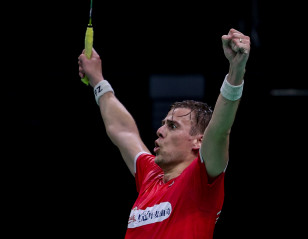
Vittinghus Sees Denmark Through 12 May 2022
Teen Stars in Thai Thriller 11 May 2022
Dad’s How Prasista Does It 11 May 2022
Eye on Future, Indonesia’s Young Women Impress 11 May 2022
’60 Per Cent’ Marin Leads Spain to Victory 10 May 2022
Day After Ultramarathon, Christo Soldiers On 10 May 2022
Canadians Impress in Gutsy Defeat 10 May 2022
Korea Scramble Against Fired-Up Singapore 10 May 2022
Sister Act Spurs Thais 9 May 2022
Plucky French Go Down Fighting to China 9 May 2022
Stubborn India Quell Canadian Challenge 9 May 2022
‘Relieved’ Kjaersfeldt Seals Danish Comeback 8 May 2022
Cahya Dewi Leads Indonesian Rout of France 8 May 2022
‘I Know I Gave Everything’ 7 May 2022
Sung Ji Hyun Backs Young Team to Go All the Way 7 May 2022
Group D Preview: Malaysia, Korea Could Provide the Fireworks 6 May 2022
Group C Preview: India Could Go Far in Thomas Cup 5 May 2022
New Zealand Out; Team USA In 4 May 2022
Group B Preview: Titanic Battles Up Ahead 4 May 2022
Group A Preview: In-Form Christie Leads Indonesia’s Campaign 3 May 2022
Vantage View of a World Champion | Part II 24 April 2022
Vantage View of a World Champ 23 April 2022
Nour Youssri: ‘Want to Make Badminton Famous in Africa’ 19 April 2022
Defending Champions Indonesia in Tricky Group 1 April 2022
Maiden Titles For Malaysia, Indonesia 21 February 2022
2021 in Review: Indonesia’s Gritty Thomas Cup Triumph 29 December 2021
2021 in Review: Newcomers Tahiti Add Freshness, Colour 28 December 2021
Tournament Calendar for 2022 Revealed 28 October 2021
Hats Off to Indonesia, Says Kenneth Jonassen 20 October 2021
‘This Is For My Big Brother’ 19 October 2021
Indonesia’s 19-Year Wait for Thomas Cup Ends 18 October 2021
Chen and Jia Inspire Magnificent Chinese Triumph 17 October 2021
Indonesia Ride Jonatan Christie Wave 17 October 2021
Japan, China in Uber Cup Final 16 October 2021
Proved a Point, Says Heo After Second Takedown of Momota 15 October 2021
With Another Epic Example, Polii Hands Over Baton 15 October 2021
Remi Rossi and the Value of a Win for Tahiti 14 October 2021
Indonesia, Thailand Survive Group of Death 13 October 2021
Nearly There, But Not Quite 13 October 2021
Battle-Hardened Veteran Revels in Familiar Role 12 October 2021
Wangcharoen Strikes Early but Indonesia Prevail 12 October 2021
Camilla Martin Wonders – ‘How Did I Do It?’ 11 October 2021
Training Stint With Gade Aids Brian Yang’s Rapid Rise 11 October 2021
On Injury-Hit Day, Michelle Li Takes a Stance for Self-Care 10 October 2021
‘I’ve Grown to Become a Mature Player’: Lee Zii Jia 10 October 2021
Best Friends Take Denmark Home 10 October 2021
‘Dream Coming True, Playing Thomas Cup on Danish Soil’ 9 October 2021
Group D Preview: China Have the Depth to Retake Uber Cup 9 October 2021
Group C Preview: For Korea, Kim Gaeun’s Form Will Be Key 8 October 2021
The Thomas Cup Story, as Recalled by an Icon 7 October 2021
Injury-Hit England Withdraw From Thomas Cup 6 October 2021
Group A Preview: Indonesia, Chinese Taipei Will Be Wary of Thailand 6 October 2021
China Feature in Opening Uber Cup Tie 30 August 2021
Hosts Denmark in Challenging Group 18 August 2021

TUC 2020 Postponed; Denmark Open to Proceed 15 September 2020
Update on TOTAL BWF Thomas and Uber Cup Finals 2020 12 September 2020
Herbert Scheele’s Thomas Cup Story 3 September 2020
BWF Ready for the Return to International Badminton 28 August 2020
BWF Announces Adjusted Tournament Calendar for 2020 27 August 2020
TOTAL BWF Thomas & Uber Cup Finals 2020 Draw 3 August 2020
On This Day: Historic Thomas Cup Triumph for Japan 25 May 2020
Thomas Cup Flashback: From Setback to Glory 24 May 2020
On This Day: China Lift Thomas Cup at First Time of Asking 21 May 2020

Flashback: TUC 2018 – China’s Young Guns Come Good 21 May 2020
Flashback: TUC 2018 – Japan’s Well-Earned Triumph 18 May 2020
New Dates for TOTAL BWF Thomas and Uber Finals 2020 29 April 2020
Update on TOTAL BWF Thomas and Uber Cup Finals 2020 7 April 2020
Conrad-Petersen to Bid Adieu After Thomas Cup 27 March 2020
TOTAL BWF Thomas and Uber Cup Finals 2020 Postponed 20 March 2020
On This Day: USA Ace First Ever Uber Cup Final 18 March 2020
French Stint Aids Honderich & Tsai 5 March 2020
Indonesia, Japan Top-Seeded for TUC 4 March 2020
Russia’s TUC Withdrawal Opens Door for Germany, Spain 2 March 2020
Qi Xuefei Inspired by ‘Role Model’ Pi Hongyan 29 February 2020
On This Day: Underdogs Malaya Become Inaugural Thomas Cup Champs 26 February 2020
Flashback: Unfancied Mexicans Defy Expectations, Qualify for First Thomas Cup 23 February 2020
TUC 2020 Lineup is Complete! 20 February 2020

Flawless Denmark Issue Rivals Stark Warning 17 February 2020
On This Day: Betty Uber Wins 50th Straight International 14 February 2020
Update on Badminton Asia Team Championships 2020 11 February 2020
Aarhus Awaits the World 6 February 2020
The Legacy of Frank Peard, First Thomas Cupper 7 October 2019
Flashback: Vittinghus Heroics Win Thomas Cup for Denmark 5 September 2019
Generational Shift Will Be Visible in Aarhus 6 August 2019
BWF Major Event Hosts 2019-2025 Awarded 29 November 2018
China’s Young Heroes – Thomas Cup Review 13 June 2018
Japan Stamp Supremacy – Uber Cup Review 8 June 2018
Title No.10 for China – Thomas Cup Final: TOTAL BWF Thomas &... 27 May 2018
Women of the Rising ‘Stun’! – Uber Cup Final: TOTAL BWF TUC... 26 May 2018
‘Tongue-Twisters’ Torment Titlists – Thomas Cup Semi-Finals: TOTAL BWF TUC Finals 2018 25 May 2018
‘Uber’ Achievers! – Uber Cup Semi-finals: TOTAL BWF TUC Finals 2018 25 May 2018
Denmark, Japan into Semis – Day 5 – Session 3: TOTAL BWF... 24 May 2018
Emotional Win for Thailand – Day 5 – Session 2: TOTAL BWF... 24 May 2018
China, Korea Overcome Jitters – Day 5 – Session 1: TOTAL BWF... 24 May 2018

Jorgensen Delivers – Day 4 – Session 3: TOTAL BWF TUC Finals... 23 May 2018
Canada Through to Quarters – Day 4 – Session 2: TOTAL BWF... 23 May 2018
China Hold Firm – Day 4 – Session 1: TOTAL BWF Thomas... 23 May 2018
Resilient Indonesia – Day 3 – Session 3: TOTAL BWF TUC Finals... 22 May 2018
Schoolgirl to the Rescue – Day 3 – Session 2: TOTAL BWF... 22 May 2018

German Scare for Japan – Day 3 – Session 1: TOTAL BWF... 22 May 2018
China, Thailand Look Ahead – Day 2 – Session 3: TOTAL BWF... 21 May 2018
Indonesia Pass Malaysian Test – Day 2 – Session 2: TOTAL BWF... 21 May 2018
Debutants Relishing Experience – Day 2 – Session 1: TOTAL BWF TUC... 21 May 2018
Korea Prevails – Day 1 – Session 3: TOTAL BWF TUC Finals... 20 May 2018
Japan Start Strong – Day 1 – Session 2: TOTAL BWF TUC... 20 May 2018
Corvee Stars in French Victory – Day 1 – Session 1: TOTAL... 20 May 2018
Banking on Home Support – TUC Finals 2018 19 May 2018

Defending Champions Confident Despite Setbacks – TUC Finals 2018 19 May 2018
Honour for Fernandez, Sornprachum and Klutzke 19 May 2018
Strong Danish Line-up – Preview: Thomas Cup Squads 11 May 2018
Li Xuerui Returns – Preview: Uber Cup Squads 9 May 2018

Bangkok Beckons! 2 May 2018
Indonesia, Japan Start ‘Thomas-Uber’ Action 12 April 2018
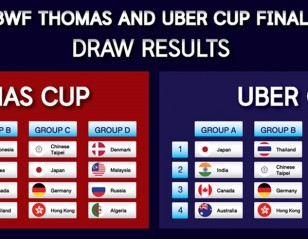
Japan in ‘Group of Death’ 22 March 2018

Hong Kong, France Qualify for TUC 2018 20 March 2018
Fitness, Equipment in Focus at World Congress 4 March 2018
Algeria to Debut in Thomas Cup 26 February 2018
Canadian Supremacy – Finals: M&F Pan Am Team Championships 2018 19 February 2018

Denmark’s Reign Continues – Finals: 2018 European Men’s & Women’s Team Championships 19 February 2018
Peru Go Down Fighting – Day 3: M&F Pan Am Team Continental... 18 February 2018
Germany in Title Bout – Day 5: 2018 European Men’s & Women’s... 18 February 2018
Jamaica, Peru in Semis – Day 2: M&F Pan Am Continental Team... 17 February 2018
Spain Survive Turkish Challenge – Day 4: 2018 European Men’s & Women’s... 16 February 2018
Algeria Make History – Finals: All Africa Men’s & Women’s Team Championships... 16 February 2018
Tight Wins for Nigeria, Mauritius – Semi-finals: All Africa Men’s & Women’s... 15 February 2018
Poland Ease Past Portugal – Day 2: 2018 European Men’s & Women’s... 15 February 2018
Indonesia, Japan Triumph – Finals: E-Plus Badminton Asia Team Championships 2018 12 February 2018
Kholik Stars in Indonesia’s Win – Semi-finals: E-Plus Badminton Asia Team Championships... 10 February 2018
Chinese Taipei Outplay Thailand – Day 2: E-Plus Badminton Asia Team Championships... 8 February 2018
Australia Prevail in Thriller – Victor Oceania Team Championships 2018 7 February 2018
Close Win For Thailand – Day 1: E-Plus Badminton Asia Championships 2018 7 February 2018
Continental Joust for TUC Qualification 2 February 2018
Li-Ning – A Stringing Success! 20 June 2016
China Brook No Challenge – Uber Cup Review 27 May 2016
A Momentous Event for Europe – Thomas Cup Review 25 May 2016
Denmark Crowned Kings of the World: TOTAL BWF Thomas & Uber Cup... 22 May 2016
Title No.14 for China – TOTAL BWF Thomas & Uber Cup Finals... 21 May 2016
Denmark Fly High – Semi-finals Session 2: TOTAL BWF Thomas & Uber... 21 May 2016
Indonesia Storm into Final – Semi-finals Session 1: TOTAL BWF Thomas &... 20 May 2016
Korea Shock China; Japan Out – Quarter-finals Session 2: TOTAL BWF Thomas... 20 May 2016
Shivani Aces it for India – Quarter-finals Session 1: TOTAL BWF Thomas... 19 May 2016
China Draw Korea in Thomas Cup Quarter-finals 19 May 2016
China Blow Away Japan – Day 4 Session 3: TOTAL BWF Thomas... 18 May 2016
Japan Struggle to Beat India – Day 4 Session 2: TOTAL BWF... 18 May 2016
Denmark Top Group D – Day 4 Session 1: TOTAL BWF Thomas... 18 May 2016

Indonesia Outclass Thailand – Day 3 Session 3: TOTAL BWF Thomas &... 17 May 2016
Korea Singed by Malaysian Singles – Day 3 Session 2: TOTAL BWF... 17 May 2016
Kjaersfeldt, Madsen Drive Danish Success – Day 3 Session 1: TOTAL BWF... 17 May 2016
China Down Battling French – Day 2 Session 3: TOTAL BWF Thomas... 16 May 2016
Indonesia Prevail Over Hong Kong – Day 2 Session 2: TOTAL BWF... 16 May 2016
Thailand Continue to Cruise – Day 2 Session 1: TOTAL BWF Thomas... 16 May 2016
Madsen Swings it for Denmark – Day 1 Session 3: TOTAL BWF... 15 May 2016
Japan Shaken by Inspired France – Day 1 Session 2: TOTAL BWF... 15 May 2016
Strong Start by Thailand – Day 1 Session 1: TOTAL BWF Thomas... 15 May 2016
TOTAL BWF Thomas & Uber Cup Finals 2016: Opening Salvos Fired as... 14 May 2016
TOTAL BWF Uber Cup Preview: China, Japan Hold the Aces 12 May 2016
TOTAL BWF Thomas Cup Preview: Can Denmark Break the Jinx? 11 May 2016
Japan Face French Obstacle in Thomas Cup Opener 19 April 2016
Powerhouses China, Japan in Group A of Thomas Cup 21 March 2016
Defending Champions Japan Seeded 5th for Thomas Cup 4 March 2016
Mexico, New Zealand in Thomas Cup final round 23 February 2016

Indonesia, China Emerge Champions – Badminton Asia Championships finals 22 February 2016
Denmark Unchallenged at the Top: European Men’s & Women’s Team Championships finals 22 February 2016
SA, Mauritius Crowned Champions: Africa Continental Team Championships finals 21 February 2016
New Zealand, Australia Reign Supreme: Oceania Men’s & Women’s Team Championships finals 21 February 2016
Mexico Clinch Men’s Title: Pan Am Team Continental Championships finals 21 February 2016
Mexico, Canada in Final: Pan Am Team Continental Championships – Day 3 20 February 2016
Bulgaria, Spain in Last-Four: European Men’s & Women’s Team Championships quarter-finals 20 February 2016
China Knocked Out – Badminton Asia Team Championships quarter-finals 20 February 2016
Garrido, Ho-Shue Shine: Pan Am Team Continental Championships – Day 2 19 February 2016
Finland in Quarter-finals: European Men’s & Women’s Team Championships – Day 3 19 February 2016
India Stun China: Badminton Asia Team Championships – Day 4 19 February 2016
Australia Win Exciting Final – Oceania Mixed Team Championships 18 February 2016
Estonia Edge Past Hungary: European Men’s & Women’s Team Championships – Day... 18 February 2016
Indonesia Beat Chinese Taipei: Badminton Asia Team Championships – Day 3 18 February 2016
Iris Wang Guides USA to Win: Pan Am Team Continental Championships –... 18 February 2016
Easy for New Zealand: Oceania Mixed Team Championships – Day 2 17 February 2016
Narrow Win for Ukraine – European Men’s & Women’s Team Championships –... 17 February 2016
Close Shave for Malaysia: Badminton Asia Team Championships – Day 2 17 February 2016

Strong Start for New Caledonia – Oceania Mixed Team Championships Day 1 16 February 2016
China Survive Scare: Badminton Asia Team Championships – Day 1 16 February 2016
Li-Ning BWF Thomas & Uber Cup Finals 2014 – Day 8: Japan’s... 25 May 2014
A Glimpse into China’s Preparation 25 May 2014
Li-Ning BWF Thomas & Uber Cup Finals – Day 7: China Retain... 24 May 2014
Li-Ning BWF Thomas & Uber Cup Finals 2014 – Day 6 –... 23 May 2014
Li-Ning BWF Thomas & Uber Cup Finals 2014 – Day 6 –... 23 May 2014
Li-Ning BWF Thomas & Uber Cup Finals 2014 – Day 5 –... 22 May 2014

BWF Descends on Delhi 22 May 2014
Li-Ning BWF Thomas & Uber Cup Finals 2014 – Day 5 –... 22 May 2014
Li-Ning BWF Thomas & Uber Cup Finals 2014: China v Thailand in... 22 May 2014
Li-Ning BWF Thomas & Uber Cup Finals 2014 – Day 4 –... 21 May 2014
Li-Ning BWF Thomas & Uber Cup Finals 2014 – Day 4 –... 21 May 2014
Li-Ning BWF Thomas & Uber Cup Finals 2014 – Day 4 –... 21 May 2014
Li-Ning BWF Thomas & Uber Cup Finals 2014 – Day 3 –... 20 May 2014
Li-Ning BWF Thomas & Uber Cup Finals 2014 – Day 3 –... 20 May 2014
Li-Ning BWF Thomas & Uber Cup Finals 2014 – Day 3 –... 20 May 2014
Li-Ning BWF Thomas & Uber Cup Finals 2014 – Day 2 –... 19 May 2014
Li-Ning BWF Thomas & Uber Cup Finals – Day 2 – Session... 19 May 2014
Li-Ning BWF Thomas & Uber Cup Finals 2014 – Day 2 –... 19 May 2014
Li-Ning BWF Thomas & Uber Cup Finals 2014 – Day 1 –... 18 May 2014
Li-Ning BWF Thomas & Uber Cup Finals – Day 1 – Session... 18 May 2014
Li-Ning BWF Thomas & Uber Cup Finals 2014: Day 1 – Session... 18 May 2014
Li-Ning BWF Thomas & Uber Cup Finals 2014: Thomas-Uber Thrills Looming 18 May 2014
Li-Ning BWF Thomas & Uber Cup Finals 2014: Mix of Confidence and... 17 May 2014
Li-Ning BWF Thomas & Uber Cup Finals 2014: Teams Can Use IRS 14 May 2014
BWF World Championships 2014: Stellar Cast for Copenhagen Worlds 11 May 2014
Li-Ning BWF Thomas & Uber Cup Finals 2014: Lin Dan; Lee Yong... 7 May 2014
Li-Ning BWF Thomas & Uber Cup Finals 2014: Denmark, Japan Open Thomas... 28 April 2014
Li-Ning BWF Thomas & Uber Cup Finals 2014: China’s Lucky Draws 30 March 2014
BWF and BAI Ink Deal for Thomas/Uber Cups 2014 27 April 2013